
Corporate Governance: Best Practices for Boards of Directors in 2026 sets the stage for this enthralling narrative, offering readers a glimpse into a story that is rich in detail and brimming with originality.
The evolution of corporate governance standards and the impact on board practices will be explored, providing valuable insights for both companies and stakeholders.
Importance of Corporate Governance
Corporate governance plays a crucial role in ensuring transparency and accountability within an organization. It establishes a framework of rules and practices that guide decision-making processes and help maintain ethical standards.
Significance of Strong Corporate Governance
- Enhances investor confidence: Companies with robust corporate governance practices are more likely to attract investors as they demonstrate a commitment to ethical behavior and long-term sustainability.
- Protects stakeholders' interests: By prioritizing the interests of stakeholders, including employees, customers, and shareholders, effective corporate governance ensures that decisions are made with their well-being in mind.
- Reduces risk of misconduct: Strong governance practices help mitigate the risk of fraud, corruption, and other unethical behaviors within the organization, fostering a culture of integrity and trust.
Evolution of Corporate Governance Standards
Over the years, corporate governance standards have evolved in response to changing business landscapes and regulatory requirements. The focus has shifted towards greater board independence, diversity, and accountability to ensure effective oversight and decision-making.
Role and Responsibilities of Boards of Directors
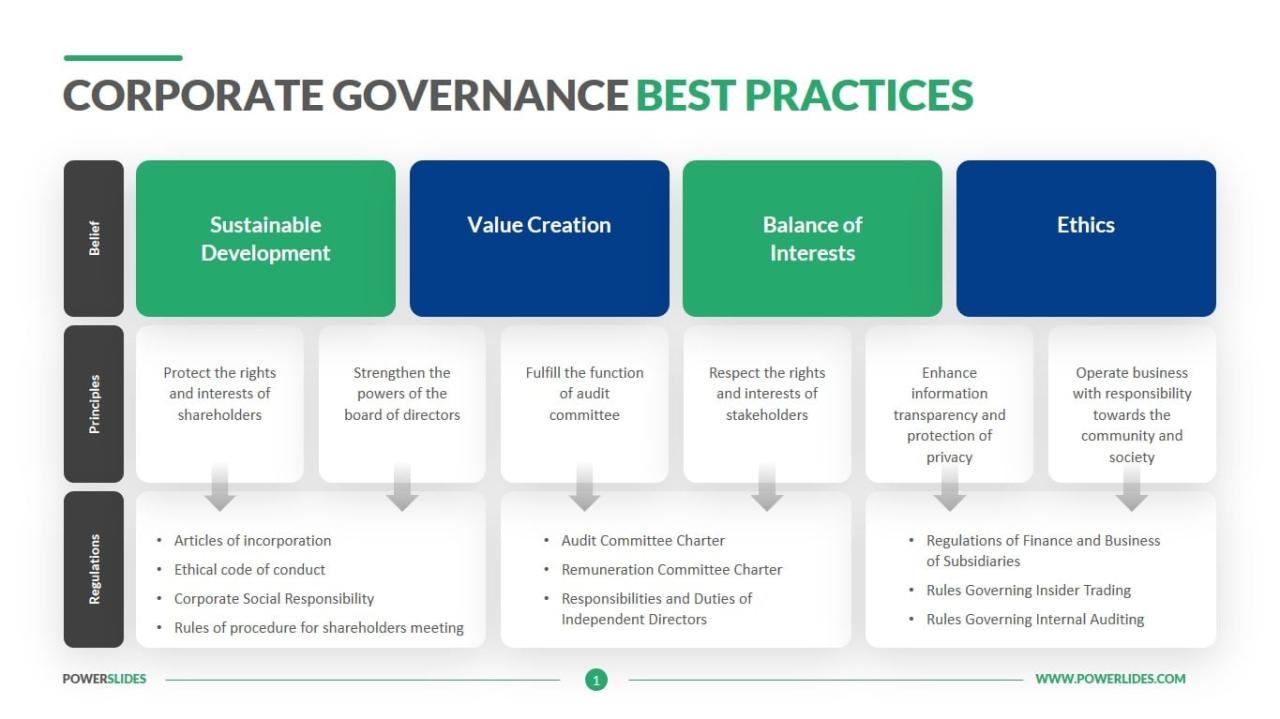
Boards of Directors play a crucial role in upholding corporate governance standards within organizations. They are responsible for overseeing the overall direction and performance of the company, ensuring that it operates in the best interest of stakeholders while complying with all relevant laws and regulations.
Primary Responsibilities of Boards of Directors
- Setting the company's strategic objectives and goals.
- Appointing, evaluating, and compensating the CEO and senior management.
- Monitoring financial performance and ensuring the company's financial health.
- Overseeing risk management and compliance with legal and ethical standards.
- Engaging with shareholders and addressing their concerns.
Challenges Faced by Boards in Fulfilling Oversight Duties
- Ensuring independence and objectivity in decision-making.
- Adapting to rapidly changing business environments and technologies.
- Balancing short-term financial results with long-term sustainability.
- Managing conflicts of interest among board members and stakeholders.
- Addressing diversity and inclusion within the board itself.
Comparison of Traditional vs. Modern Board Structures
Traditional board structures often consisted of long-tenured directors with deep industry expertise, while modern approaches emphasize diversity, independence, and expertise in areas such as technology and sustainability. Modern boards are more agile and proactive in addressing emerging risks and opportunities, reflecting the dynamic nature of today's business landscape.
Emerging Trends in Corporate Governance
In the rapidly evolving landscape of corporate governance, several trends are shaping the practices of boards of directors in 2026 and beyond. These trends are influenced by various factors, including technological advancements, changing stakeholder expectations, and the growing emphasis on sustainability.Influence of Technology and Digitization
Technology and digitization have significantly impacted board decision-making processes, enabling boards to gather and analyze data more efficiently, enhance communication among board members, and improve overall governance practices. The use of digital tools and platforms has streamlined board operations, allowing for more informed and timely decision-makingImpact of Environmental, Social, and Governance (ESG) Factors
Environmental, social, and governance (ESG) factors are increasingly becoming a focal point for boards of directors, influencing their agendas and strategic planning. Boards are recognizing the importance of sustainability and social responsibility in driving long-term value creation and are integrating ESG considerations into their decision-making processes. By prioritizing ESG factors, boards are not only meeting the expectations of stakeholders but also contributing to a more sustainable and resilient business model. Embracing ESG practices can enhance a company's reputation, attract top talent, and foster innovation, ultimately leading to improved financial performance.Best Practices for Boards of Directors
Boards of Directors play a critical role in ensuring effective corporate governance. By adopting best practices, boards can enhance their effectiveness in guiding and overseeing the organization. These practices not only improve governance but also contribute to organizational success and sustainability.
Implementing Diversity and Inclusion Initiatives
One essential best practice for boards of directors is to prioritize diversity and inclusion within the boardroom. By having a diverse group of directors with varied backgrounds, experiences, and perspectives, boards can make more informed decisions and better represent the interests of stakeholders.
- Evaluate board composition to ensure diversity in terms of gender, ethnicity, age, and expertise.
- Implement inclusive practices that allow all board members to contribute effectively and feel valued.
- Establish mentorship programs to support the development of underrepresented groups within the board.
Enhancing Board Effectiveness through Continuous Education
Another successful board practice is to prioritize continuous education and development for board members. By staying informed about emerging trends, regulations, and best practices, directors can make more strategic decisions and effectively fulfill their oversight responsibilities.
- Provide ongoing training and development opportunities for board members on governance, risk management, and industry-specific knowledge.
- Encourage board members to participate in relevant conferences, seminars, and professional development programs.
- Establish a culture of learning and knowledge sharing within the boardroom to foster continuous improvement.
Implementing Stakeholder Engagement Strategies
Successful boards prioritize stakeholder engagement as a key component of effective governance. By actively involving stakeholders in decision-making processes and seeking their input, boards can build trust, enhance transparency, and make decisions that are aligned with the organization's values and long-term goals.
- Establish formal mechanisms for engaging with key stakeholders, such as shareholders, employees, customers, and communities.
- Regularly communicate with stakeholders to provide updates on board decisions, performance, and key initiatives.
- Integrate stakeholder feedback into board discussions and decision-making processes to ensure alignment with stakeholder interests.
Final Thoughts
As we conclude this discussion on Corporate Governance: Best Practices for Boards of Directors in 2026, it becomes evident that embracing sustainable governance frameworks and staying abreast of emerging trends are crucial for organizational success in the future.
Questions and Answers
What are the primary responsibilities of boards of directors in upholding corporate governance standards?
Boards of directors are responsible for overseeing the management, setting strategic goals, ensuring compliance, and protecting the interests of stakeholders.
How has technology influenced board decision-making processes in corporate governance?
Technology has streamlined communication, data analysis, and decision-making, enabling boards to make more informed and efficient choices.
What are some examples of successful board practices that have improved organizational performance?
Examples include diverse board compositions, regular performance evaluations, and transparent communication with stakeholders.