

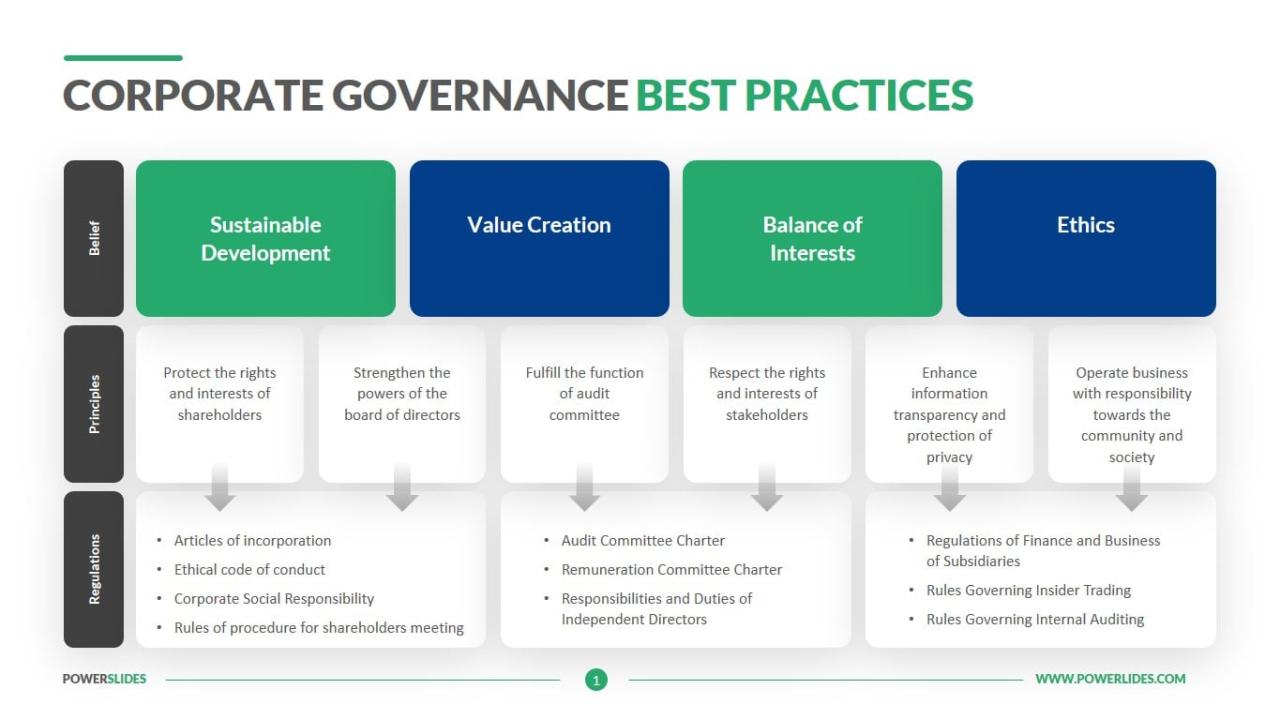
Exploring the landscape of Corporate Governance: Best Practices for Boards of Directors in 2026 unveils a world where transparency, accountability, and success intertwine. Dive into the evolving trends, best practices, and ethical considerations that shape the future of corporate governance.
Importance of Corporate Governance
Corporate governance plays a crucial role in ensuring transparency and accountability within organizations. By establishing clear guidelines and procedures, it helps to prevent misconduct and unethical behavior, ultimately safeguarding the interests of all stakeholders.
Significance of Effective Corporate Governance
- Effective corporate governance practices contribute to long-term organizational success by promoting ethical decision-making and risk management. Boards of directors are able to provide strategic guidance and oversight, leading to sustainable growth and profitability.
- Good corporate governance also enhances investor confidence and attracts potential investors. When stakeholders have trust in the integrity of the organization, it can lead to increased investment and improved access to capital.
- Furthermore, strong corporate governance structures foster positive relationships with stakeholders, including employees, customers, suppliers, and the community. By prioritizing accountability and responsibility, organizations can build trust and credibility, enhancing their reputation in the market.
Evolving Trends in Corporate Governance
In 2026, corporate governance practices have continued to evolve, adapting to the changing business landscape and regulatory environment. Several key trends are shaping the way boards of directors operate and make decisions.Increased Focus on Environmental, Social, and Governance (ESG) Criteria
- Companies are increasingly incorporating ESG criteria into their governance frameworks to address sustainability issues and social responsibilities.
- Investors are placing greater emphasis on ESG performance when evaluating companies, influencing board decisions and strategies.
- Boards are expected to oversee and integrate ESG factors into their decision-making processes to drive long-term value creation.
Diversity and Inclusion in Board Composition
- There is a growing recognition of the importance of diversity and inclusion in boardrooms, leading to efforts to enhance board composition with diverse perspectives.
- Companies are focusing on gender diversity, ethnic diversity, and inclusion of individuals with varied backgrounds to improve decision-making and governance effectiveness.
- Regulators and stakeholders are calling for greater transparency and accountability in board diversity efforts to ensure fair representation and inclusivity.
Enhanced Board Oversight and Risk Management
- Boards are strengthening their oversight of risk management processes to address emerging risks such as cybersecurity threats, climate change, and geopolitical uncertainties.
- There is a shift towards proactive risk identification, assessment, and mitigation strategies to safeguard company interests and stakeholder value.
- Technology tools and data analytics are being utilized to enhance risk monitoring capabilities and decision-making processes within boards.
Best Practices for Boards of Directors
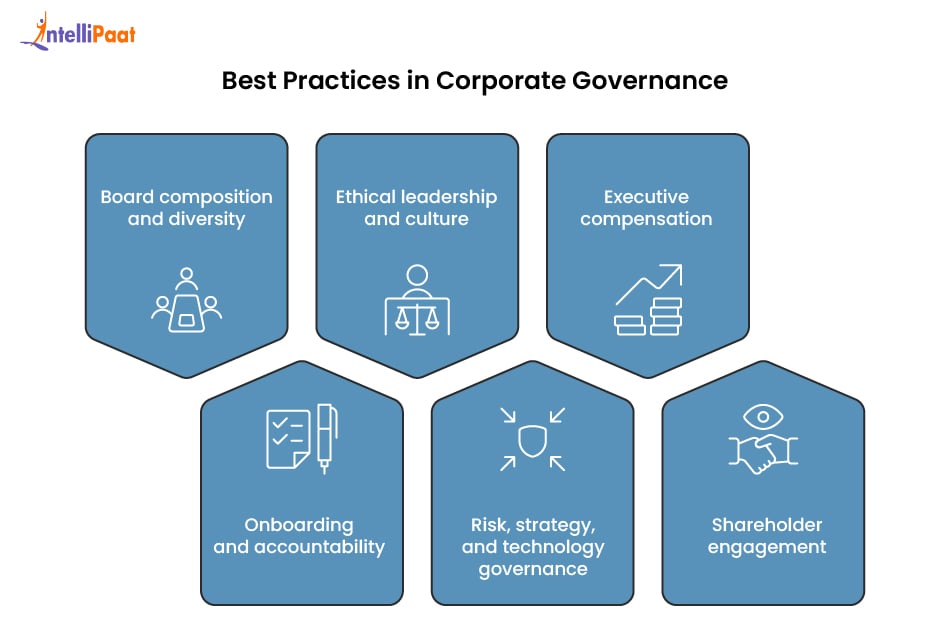
Boards of Directors play a crucial role in ensuring strong corporate governance within organizations. They are responsible for setting the company's strategic direction, overseeing management, and safeguarding the interests of shareholders.
Key Responsibilities of Boards of Directors
Boards of Directors have several key responsibilities to uphold in order to maintain effective corporate governance:
- Setting the company's strategic direction and long-term goals.
- Monitoring financial performance and ensuring the company operates within legal and ethical boundaries.
- Appointing and overseeing the performance of the CEO and top management.
- Ensuring adequate risk management and compliance practices are in place.
Examples of Successful Board Structures and Compositions
Successful boards often exhibit the following characteristics in their structures and compositions:
- A diverse mix of expertise and backgrounds among board members.
- An appropriate balance of independent directors to ensure objectivity in decision-making.
- Adequate representation of stakeholders' interests, including shareholders, employees, and customers.
The Importance of Diversity and Inclusion within Boardrooms
Diversity and inclusion within boardrooms are essential for effective decision-making and overall organizational success. By incorporating diverse perspectives and experiences, boards can make more well-rounded and informed decisions that benefit the company as a whole.
Risk Management and Compliance
Effective risk management and compliance with regulatory requirements are essential components of corporate governance. Boards of directors play a crucial role in overseeing these strategies to ensure the long-term success and sustainability of the organization.
Overseeing Risk Management Strategies
Boards of directors can oversee risk management strategies effectively by:
- Setting clear risk tolerance levels and establishing risk management policies.
- Regularly reviewing and evaluating potential risks facing the organization.
- Engaging with internal and external experts to assess risks and develop mitigation strategies.
- Monitoring the implementation of risk management plans and adjusting them as needed.
Role of Compliance with Regulatory Requirements
Compliance with regulatory requirements is vital for maintaining the trust of stakeholders and avoiding legal repercussions. Boards ensure compliance by:
- Staying informed about relevant laws, regulations, and industry standards.
- Implementing internal controls and processes to ensure adherence to regulations.
- Conducting regular audits and assessments to identify and address compliance gaps.
- Holding management accountable for maintaining compliance and addressing any issues promptly.
Mitigating Risks while Maintaining Compliance
Boards can mitigate risks while maintaining compliance by:
- Integrating risk management and compliance efforts to create a holistic approach to governance.
- Establishing a culture of transparency and accountability throughout the organization.
- Providing ongoing training and education on risk management and compliance for directors and employees.
- Regularly reviewing and updating risk management and compliance frameworks to adapt to changing regulations and business environments.
Sustainability and Ethics
As the business landscape evolves, the integration of sustainability practices into corporate governance frameworks has become increasingly crucial. Companies are not only expected to focus on financial performance but also on their impact on the environment and society. This shift towards sustainability is reshaping how boards of directors approach decision-making processes.
Integration of Sustainability Practices
- Boards need to assess the environmental and social impact of their decisions, considering long-term sustainability.
- Implementing sustainability practices can enhance brand reputation and attract socially conscious investors.
- Companies that prioritize sustainability are better positioned to mitigate risks associated with climate change and regulatory changes.
Significance of Ethical Considerations
- Ethical considerations play a vital role in ensuring that board decisions are aligned with the company's values and ethical standards.
- Unethical behavior can lead to reputational damage, legal issues, and loss of stakeholder trust.
- Boards must establish clear ethical guidelines and codes of conduct to guide their decision-making processes.
Ensuring Ethical Conduct and Sustainable Practices
- Regularly review and update ethical policies to adapt to changing business environments and societal expectations.
- Provide ethics training for board members to ensure a deep understanding of ethical dilemmas and compliance requirements.
- Integrate sustainability goals into the company's overall strategy to embed sustainable practices into the organization's culture.
Epilogue
In conclusion, the journey through Corporate Governance: Best Practices for Boards of Directors in 2026 highlights the pivotal role of boards in fostering sustainable practices, ethical decision-making, and effective governance. Embracing these principles can lead organizations to long-term success and stakeholder satisfaction.
FAQ Section
What is the significance of corporate governance?
Corporate governance plays a crucial role in maintaining transparency, accountability, and building strong relationships with stakeholders.
How can boards of directors ensure effective risk management?
Boards can oversee risk management strategies by actively monitoring and evaluating potential risks, implementing mitigation plans, and ensuring compliance with regulatory requirements.
Why is diversity and inclusion important in boardrooms?
Diversity and inclusion in boardrooms lead to varied perspectives, better decision-making, and increased innovation, contributing to overall organizational success.